


You have access to an inner compass, a quiet instrument you can use to guide yourself through life, if you know how to use it.
In the military, every new recruit goes through land navigation training. Armed with a map, a compass, and little else, they’re sent out to make their way across a difficult course.
The course is designed to disorient. It’s often done at night, with no obvious landmarks. No church steeples or graveyards to orient by. Soldiers have to rely on an observant eye, noticing subtle details: an isolated bush, a twisted tree, a large boulder. These become their personal guideposts. The markers they use to confirm they’re still on course.
Failure comes from missing those details, from scanning the horizon for grand landmarks that never appear.
Getting lost is part of the training. The real test isn’t in staying perfectly on course, but in the ability to reorient; to stop, study the map, and find your position again. Skilled navigators are those who keep checking, adjusting, and confirming their direction as they move.
Land navigation remains a vital skill even in our high-tech world. A soldier who can find their way with only a map and compass will never be stranded when technology fails.
And just as soldiers must reorient themselves to the map, we too have to pause and check in with our own internal sense of direction. Without that pause, it’s easy to walk confidently in the wrong direction.
In this piece, I want to explore what I mean by an inner compass — and how you can begin to access it.
Western culture has long operated under a perceived duality — the separation of mind and body, often called the “Cartesian split.”
We’ve come to treat thinking as something that happens in isolation, above the neck. Logic, reason, and intelligence are imagined as mental functions detached from the rest of the body, as if the mind were a kind of executive control room, issuing orders to the flesh below.
You can see this split everywhere. You go to a doctor for pain in your chest, but to a therapist for the pain in your heart. In schools, learning happens while seated and still, with movement confined to PE. Over time, that conditioning wires itself into us. We start to feel unproductive unless we’re sitting in front of a screen, our minds busy while our bodies go quiet.
This habit of dividing the mental from the physical has shaped how we understand intelligence itself. It’s led us to believe that reason operates independently. That logic alone drives decision-making.
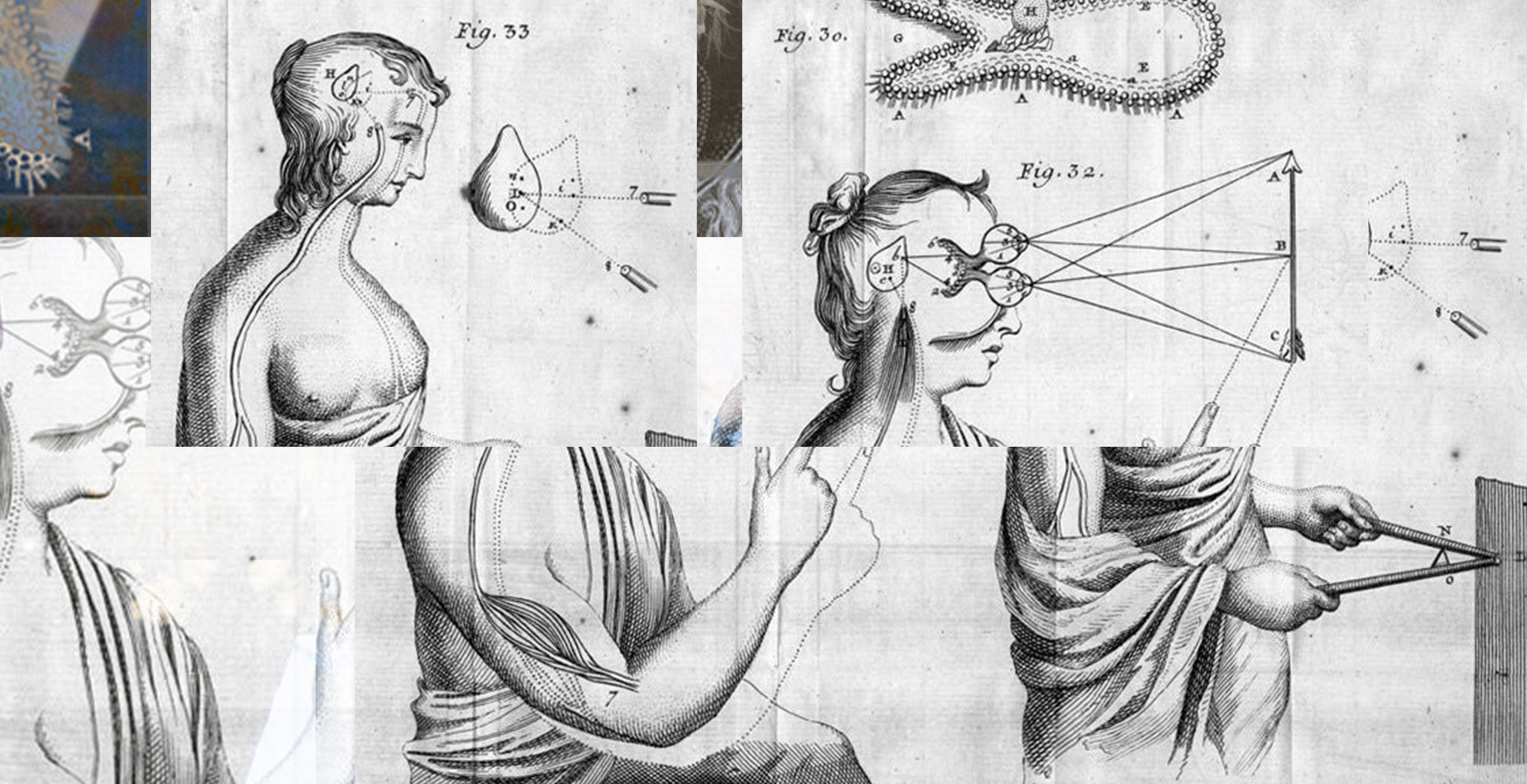
But in the early 1990s, research began to show just how incomplete that picture was.
At the University of Iowa, a team of neurologists were quietly building something remarkable — a long-term patient registry that tracked individuals with specific brain injuries caused by strokes, tumors, or trauma. Unlike most short-term studies, this one followed patients for years, sometimes decades, mapping how different lesions affected emotion, memory, and behavior.
Through this work, Antonio Damasio made one of the most important discoveries in modern psychology. He focused on a small but vital region of the brain, the ventromedial prefrontal cortex, or vmPFC.
This area acts as the brain’s internal evaluator, linking sensations in the body to past experience which guide present choices. Each feeling carries the memory of what came before. The vmPFC draws on those memories to assign value, helping us sense what feels right or wrong, safe or uncertain, before we can explain why.
Damasio found that these patients still had their intelligence. Their memory and language were intact. They could reason clearly, weigh pros and cons, and argue their point of view. Yet their lives often fell apart. They made reckless financial decisions, sabotaged relationships, or became paralyzed by even the simplest choices.
Nothing seemed wrong with their logic, and yet, something essential was missing.
Damasio began to see that these individuals had lost contact with the physical signals that arise from the body. The subtle sensations of unease, curiosity, or excitement. The quiet tug of “this feels right” or “something’s off” were gone. Every decision became a purely mental exercise, detached from feeling.
He called the missing link somatic markers — the body’s way of storing emotional traces from past experience. These visceral cues act as shortcuts, narrowing down the overwhelming number of possible choices. They don’t replace logic; they inform it.
Damasio argued that logic never works alone. The body is always speaking through shifts in heart rate, muscle tone, hormones, and breath. The brain listens and responds. Together, they form an inner landscape, a subtle map that tags each option as good, bad, risky, or rewarding.
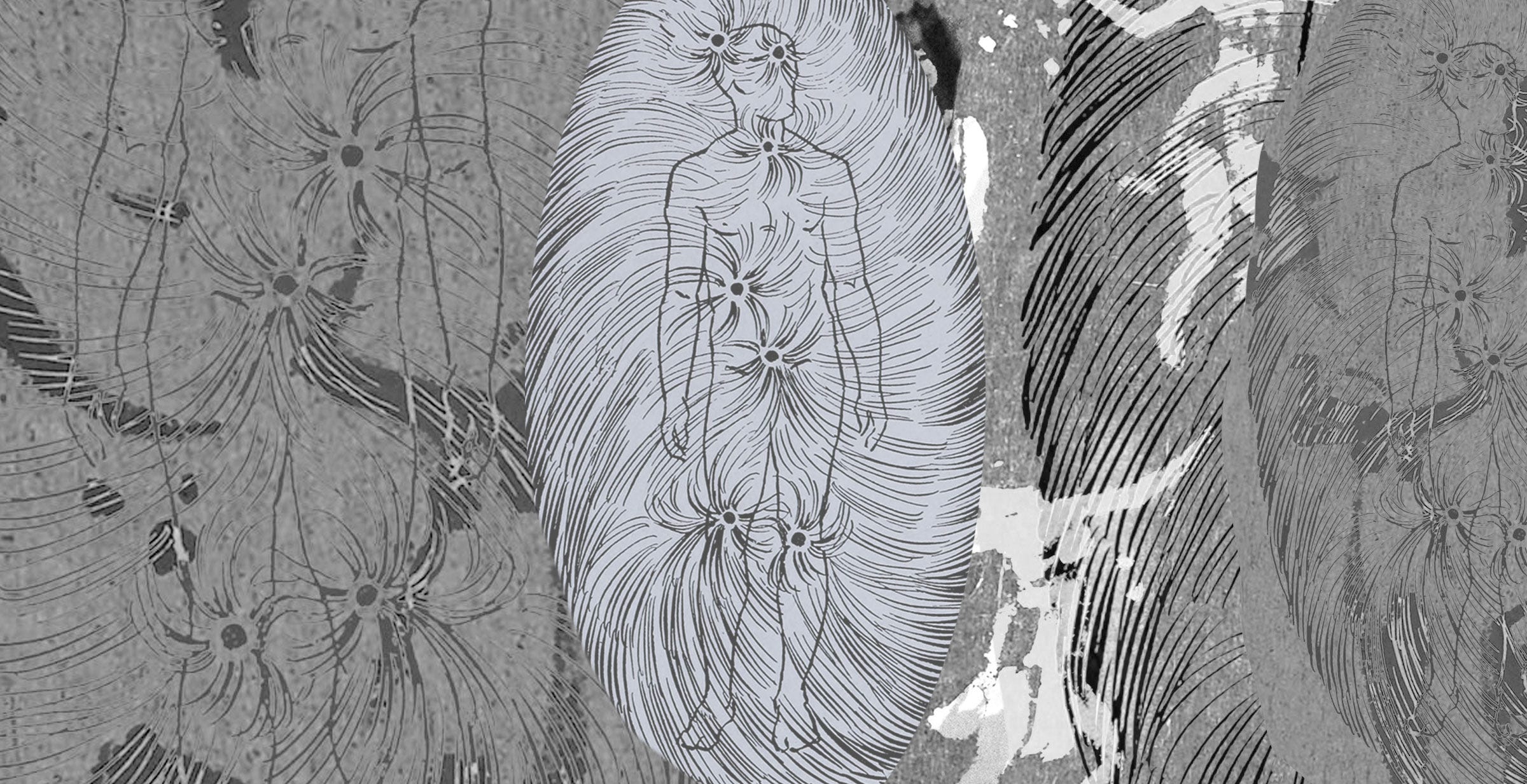
When we lose access to that input, reason itself drifts. It becomes unanchored. All calculation, no compass.
Damasio’s research revealed that emotion isn’t the enemy of reason, as we’ve long assumed. It’s the foundation of it.
Our capacity for logic, judgment, and rationality doesn’t emerge in isolation. It grows out of an ongoing conversation between the brain’s higher functions and the body’s felt experience. When that dialogue breaks down, we lose something far more subtle than intelligence. We lose the feedback loop that keeps us attuned to reality itself.
More than a decade after Antonio Damasio introduced his somatic marker hypothesis, John Coates began exploring how the body itself shapes decision-making in the heat of financial markets.
Then a trader for Goldman Sachs and later for Deutsche Bank, Coates lived inside the emotional highs and lows of the market. During his time as a bond trader, a friend of his was completing a PhD in neuroscience at Rockefeller University, and Coates began spending time there. When markets slowed, he’d grab a cab uptown to sit in on lectures or watch experiments unfold — drawn by the uncanny parallels he saw between what was happening in the lab and what he witnessed on the trading floor.
What struck him was how directly the science mapped onto finance. Traders’ bodies reacted instantly to volatility; heart rates spiked, cortisol levels rose, stomachs tightened, often before they consciously knew why.
The markets would twitch, and their physiology would answer. A trader might feel unease as prices soared, even while his reasoning insisted everything looked fine. Another might feel calm just as the market began to turn, without yet knowing why.
These moments revealed something profound: the body was not passively recording the mind’s decisions, it was leading them. It was registering shifts in risk and uncertainty before thought arrived, moving faster than conscious awareness could catch. What traders called “gut instinct” wasn’t a mystical hunch or a quirk of intuition; it was their physiology processing information beneath the surface, drawing on years of embodied experience.
Coates began to see these signals differently. They weren’t noise. They were data. The body’s own predictive model, shaped by repetition and stored as physiological memory. The heart, the gut, and the hormones were running simulations long before the mind began its analysis.
In this sense, he was watching Damasio’s theory play out in real time: the body encoding traces of past outcomes and reactivating them to guide the present. Traders who learned to listen to those signals tended to act with precision. Those who ignored or misread them often moved too soon or too late.
Coates’s work quietly extended a conversation that had exploded into public awareness the year before. In 2011, Daniel Kahneman’s Thinking, Fast and Slow gave us the language of two systems: the fast, intuitive one and the slow, deliberate one. The book became a cultural touchstone, named by The New York Times as one of the ten best of the year.
Kahneman urged caution. He showed that intuition, while often helpful, can be riddled with bias and illusion. His advice was to “keep intuition on ice”. Slow down, engage reason, and test the first impulse before trusting it.
Coates’s book came out a year later, but it carried a different kind of insight, one that didn’t fit the frame of cognitive psychology. Kahneman had shown that we make decisions automatically; Coates showed that this automaticity isn’t just cognitive, it’s physiological. The “fast” system Kahneman described lives in the body, in the racing heart, the tightening gut, the sudden calm that settles in before a decision. These physical signals register truth or danger long before the mind has time to weigh the evidence.
Both perspectives are true. Intuition can mislead us when it’s hijacked by fear or bias, but it can also guide us with remarkable clarity when it’s informed by deep experience. In a future piece, I’ll explore this paradox. Why we sometimes react irrationally in one moment and see with startling precision in another, and how that difference traces back to the emotional landscape we each carry within us.
Coates’ work didn’t make the same cultural impact, but I think that’s because it was ahead of its time. In many ways, it still is.
Over the next five years, I suspect it will become common knowledge. Coates was describing, long before it was fashionable, that our best decisions aren’t just made by the brain. They’re felt by the whole organism.
I became very curious about all of this because I grew disenchanted with the virtues of productivity.
For years, I taught people how to be less distracted, more focused, and more structured. The goal was to help them get more done in less time — to master their attention so they could master their work.
That work began in 2019, when I was running speed-reading and memorization workshops. I’d go into high schools, MBA programs, and corporate teams, teaching people how to retain more information, read faster, and manage their cognitive load.
Everywhere I went, I saw the same pattern: fractured minds. People were driven and ambitious, but they were also blocked. They wanted to move forward but couldn’t seem to find their rhythm. One guy summed it up perfectly when he told me, “I have all the intention, but no attention.”
At first, I believed the solution was structural, that if we could train focus and build better habits, people would feel freer. And for a while, that seemed true. The programs worked. People became more organized, more efficient, more productive.
But over time, I began to question what I was complicit in. Was I really helping people grow, or just making them better taskmasters? Life seemed to be reduced to something to be optimized. A game of owning your to-do list, rather than understanding why those tasks mattered in the first place.
I had imagined that getting more done in less time would create space for internal growth. That once the clutter cleared, people would naturally give more time to what was meaningful to them. But that rarely happened.
Instead, the free time was quickly filled with more work, more obligations, more noise. The machine simply accelerated.
By 2023, I began to notice something deeper: people weren’t just busy — they were disoriented. Fewer and fewer felt they had any real control over their time or attention.
What I was seeing in individuals was a reflection of something much larger. A world that keeps us endlessly responding to external signals, constantly checking, refreshing, reacting. It made me think about how early this conditioning begins.
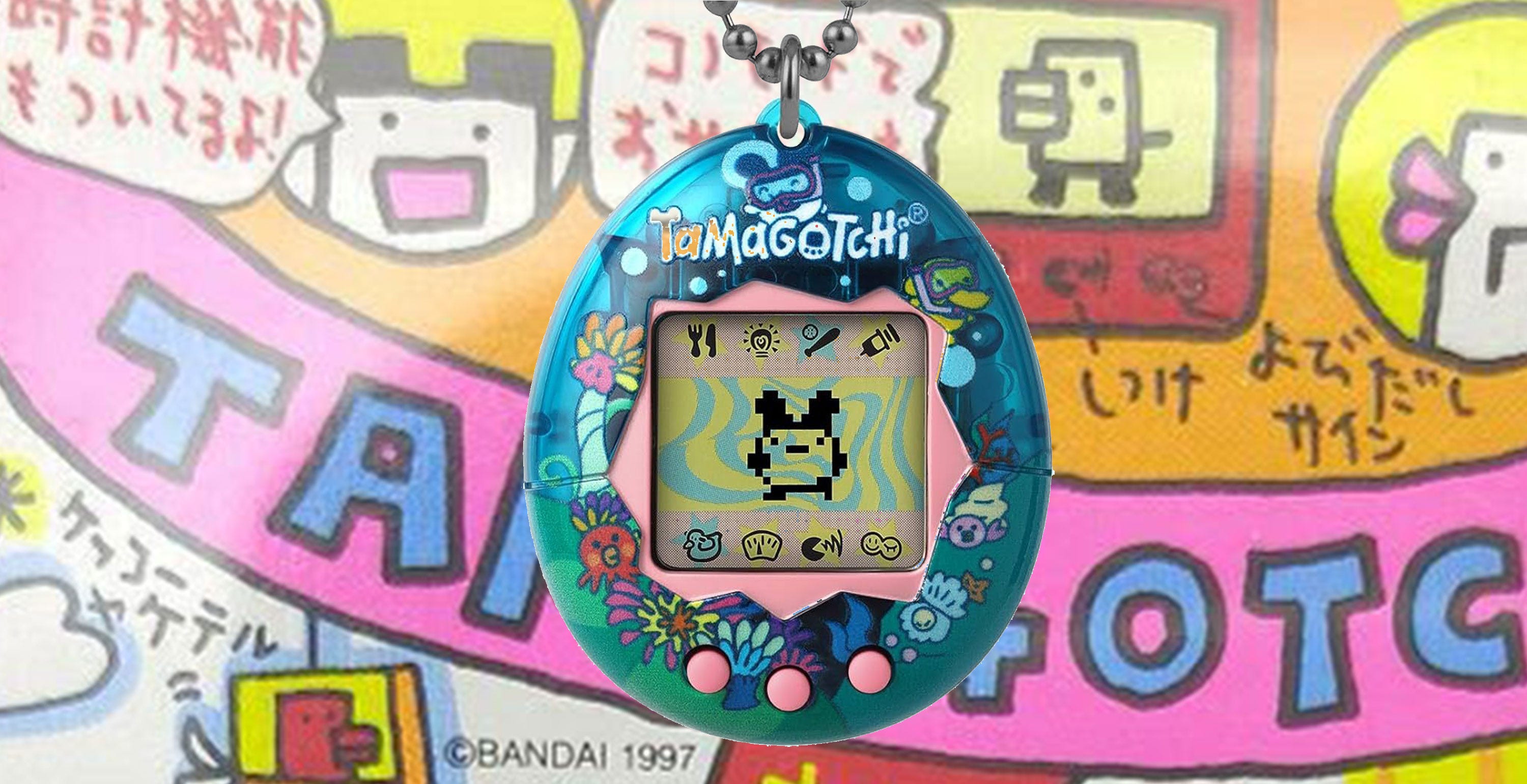
Do you remember the Tamagotchi?
It was an egg-shaped device with a tiny pixelated screen, like playing Snake on a Nokia 6110, for those who remember. By 1997, it had become a global frenzy. Millions were sold across the US and Europe.
Inside the device lived a virtual pet that would hatch, grow, and eventually die, usually within two weeks. It was designed as a toy to teach children about nurturing and responsibility.
The game was simple: keep your pet alive for as long as possible. There was no pause button. When it needed to be fed, cleaned, or played with, it beeped. A reminder that you were responsible. If you ignored it, it could die.
Kids became deeply attached to their black-and-white pixelated pets, and distraught when they died. Classrooms were filled with the sound of beeping devices as children compulsively checked their Tamagotchis, desperate to keep them alive. By the end of 1997, many schools around the world had banned them for being too disruptive.
How did kids become so emotionally attached to something so primitive?
It wasn’t the graphics.
It was the design.
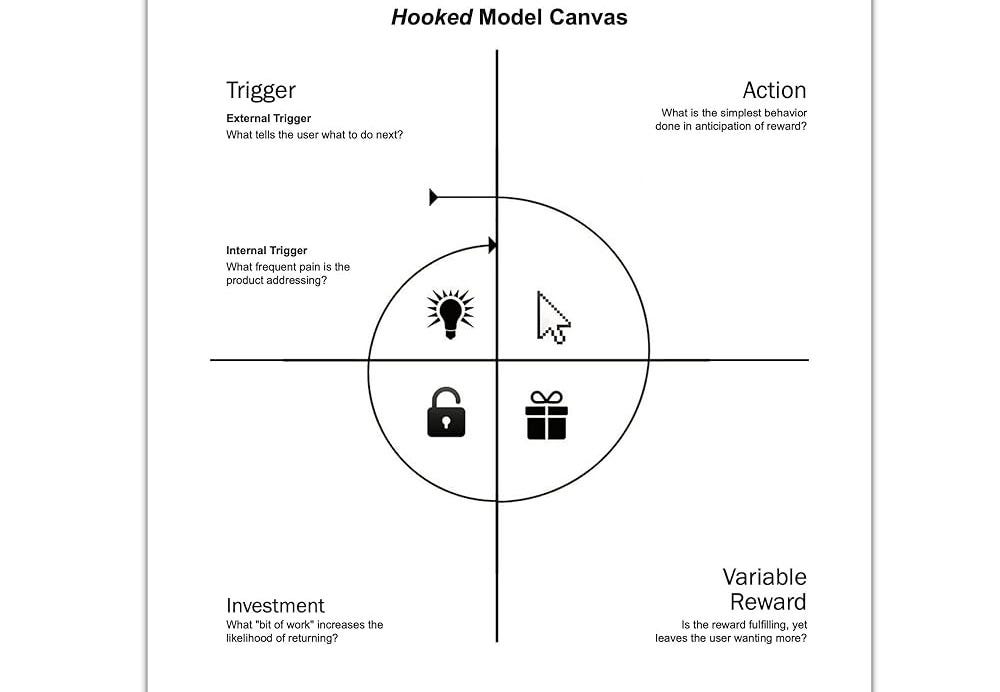
The engineers who created the Tamagotchi followed a process that would later be known as the Hooked Model, coined by behavioral designer Nir Eyal.
A quick point of irony: in 2013, Eyal published Hooked: How to Build Habit-Forming Products. Six years later, he released Indistractable: How to Control Your Attention and Choose Your Life.
Make of that what you will.
The Hooked Model unfolds in four steps:
1. Trigger. An external cue draws you in; a sound, vibration, or notification that prompts action.
On the Tamagotchi, it was the high-pitched beep and flashing screen.
2. Action. The behavior that follows must be simple and satisfying.
On the Tamagotchi, it was pressing a button to feed, clean, or play with your pet.
3. Variable reward. Unpredictable outcomes create anticipation and drive engagement.
Sometimes your pet thrived; other times it got sick or died despite your care. The uncertainty kept you checking, wondering what state it might be in next.
4. Investment. Each small action creates emotional and time investment, making it harder to step away.
You named your pet. You nurtured it. You talked about it with friends.
When these four steps repeat enough times, something shifts; you no longer need the external trigger. The pull now comes from within.
Boredom, anxiety, or curiosity prompt you to check before the beep.
That’s when the loop closes.
You’re hooked.
This design framework now underpins nearly every digital product that measures success by engagement. It’s not just your social media feeds or streaming apps — it’s your inbox, your productivity tools, even your fitness trackers.
The most damaging part of this design isn’t just distraction. It’s the erosion of choice.
We think we’re the users, when in fact, we’re the product.
What’s being consumed isn’t the app. It’s us. Our time, our attention, our nervous systems are the scarce, valuable resources.
This is accomplished, not through force, but by quietly rerouting our instincts. Teaching our bodies to respond to external signals instead of our own. Reshaping what we feel and slowly rewriting the body’s guidance system from the inside out.
Abraham Maslow spent his career exploring self-actualization — what it means for someone to become who they are capable of being. He found that what separates a self-actualized person from those simply meeting their basic needs is that they know what they want. Just as importantly, they also know what they don’t — and they live their life in accordance with both.
He once wrote:
Recovering the self must include the recovery of the ability to have and to cognize these inner signals, to know what and whom one likes and dislikes, what is enjoyable and what is not, when to eat and when not to, when to sleep, when to urinate, when to rest. The experientially empty person, lacking these directives from within…must turn to outer cues for guidance…he guides himself by clocks, rules, calendars, schedules, agenda, and by hints and cues from other people.
This quote is from The Farther Reaches of Human Nature (1971). It was a very different world, but even then, he was observing how external conditioning is what overshadows our inner compass.
When we lose connection to ourselves, we lose the ability to feel what’s true. We start reaching outward for orientation — looking for figures to tell us how to think, what to value, where to go. In the absence of inner guidance, we follow whatever direction is most confidently broadcast by others.
I feel fortunate to have been off social media, barring LinkedIn, for the past seven years. Because I’m not on it, I’ve become more aware of how easily we absorb and repeat the ideas around us. It’s striking how often I hear people speak with conviction about something they’ve read or heard online, and how quickly that conviction fades when you ask a few simple questions.
It’s not that people aren’t intelligent; it’s that they’re not metabolizing what they take in. They’re not slowly making sense of the world in their own way. They’re immersed. Feeling everything all at once. Passing that emotional charge onto whoever they’re with.
The internet is full of speculation about the possibilities of artificial intelligence: curing cancer, transforming education, and driving massive gains in productivity. These are real and exciting possibilities. But amid all of it, I feel more certain than ever that the most advanced “device” we have access to is the one we already inhabit: the body.
Most of our suffering comes from forgetting this simple fact — that the truest guidance doesn’t arrive from the outside. It’s carried within, in the quiet language of sensation and intuition.
The inner compass never disappears. It just waits for us to turn back toward it.
A lot of wisdom here, Patrick.
The adoption of wisdom from traditions like stoicism and Buddhism by corporate commentators and consultants to make better employees is truly distressing and somehow seems unethical.
In the old days of not that long ago, naval officers had to learn real navigation, both celestial and dead reckoning. By doing so, they absorbed an innate sense of trigonometry and the ability to triangulate intuitively to consider their place in the world. Much is gained, but also lost in the age of GPS.
✨🧭✨ your talk in the Lab stuck with me, Patrick! Thanks for sharing this with the world